Why Escajeda
Floor Coating From a Restoration Crew
Since 2006 we have repaired what water, freeze-thaw and poor preparation do to Pittsburgh buildings. A floor coating fails for the same reasons a wall does, which is why we read a floor before we finish it rather than sealing the problem underneath.
Finishes & Options
Four Ways to Finish a Floor
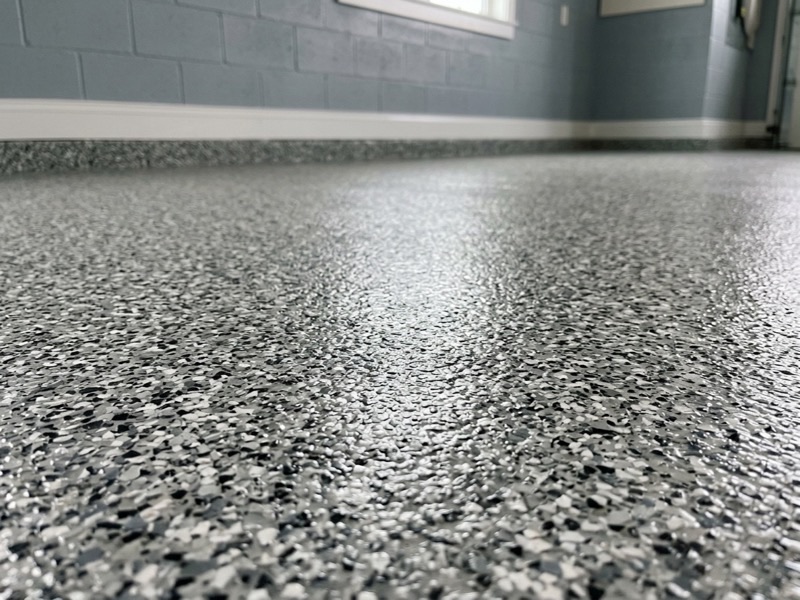
Decorative Flake
Vinyl chips broadcast into the base coat while it is still wet. The texture disguises minor slab flaws, adds grip underfoot, and comes in blends you can match to the room. The default choice for garages and basements, and for good reason.
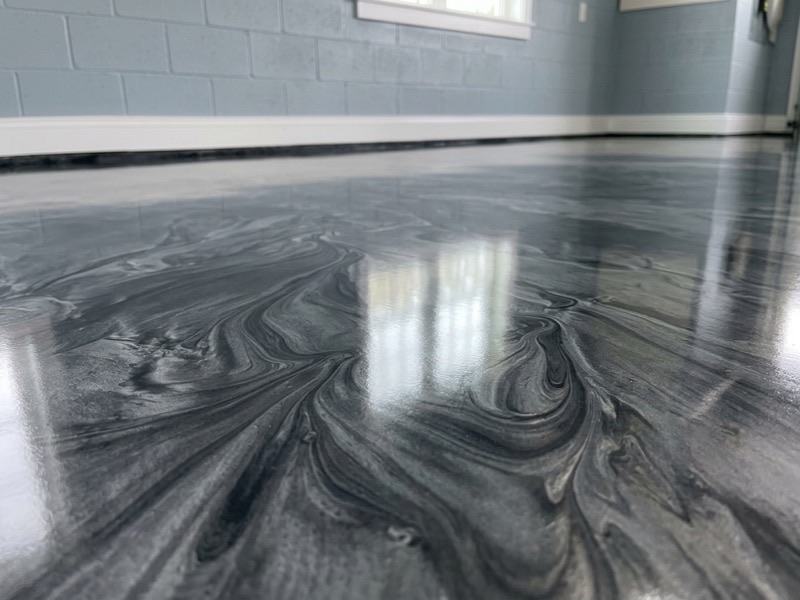
Metallic
Pigments moved through the resin so no two square feet look alike: swirled, deep and reflective. Choose it when the floor is meant to be noticed: showrooms, retail spaces and residential rooms doing double duty.
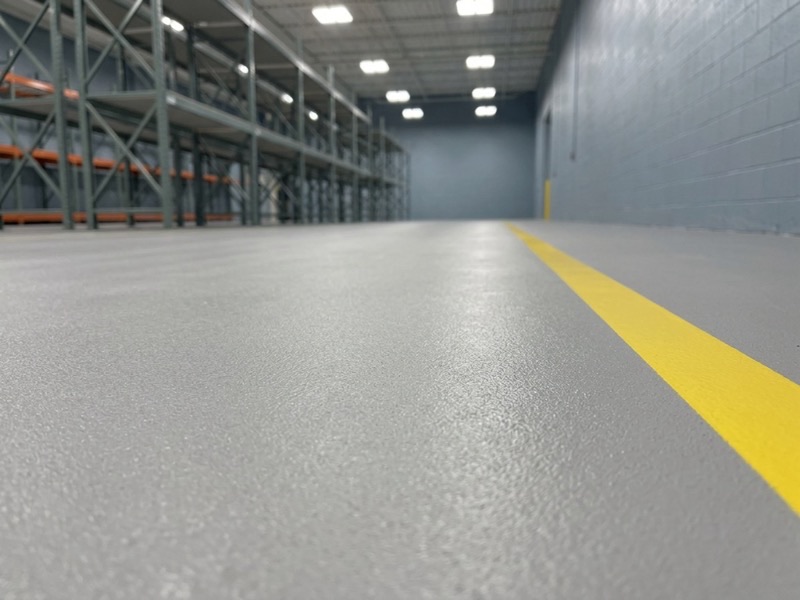
Industrial
High-solids epoxy and urethane builds for shops, plants and warehouse aisles. Rated for chemical exposure, abrasion and impact, and specified around forklift traffic and wash-downs rather than foot traffic.
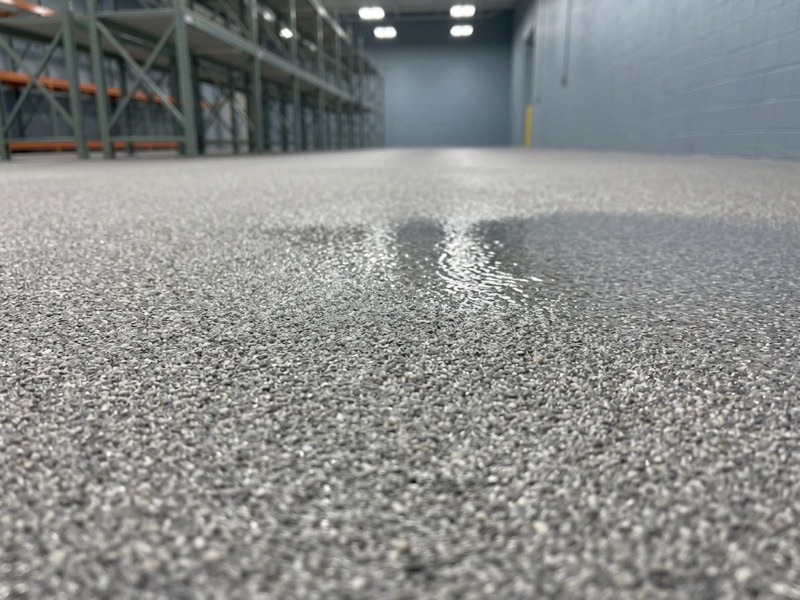
Anti-Slip
A graded aggregate worked into the topcoat for ramps, wash bays and commercial kitchens. Included by default on industrial work and available on any residential floor where wet feet are a given.
Prep Decides Everything
How We Build a Floor That Stays Down
Rolling on a coating is the easy part and the last part. Everything that determines whether it is still there in ten years happens first.
Profile the Slab
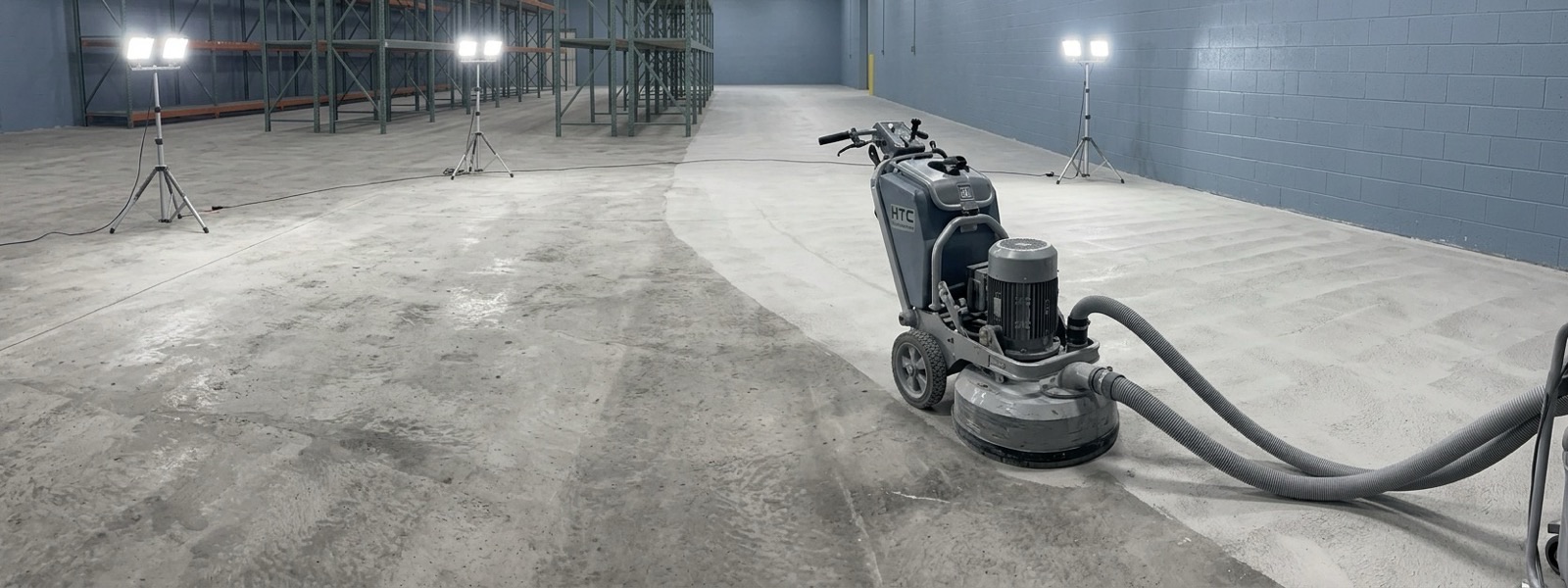
We diamond-grind the floor to a measured profile. Acid etching is cheaper and easier, and it is why so many coatings let go in year two. Grinding opens the pores so the resin keys into the slab instead of sitting on it.
Make the Floor Sound First
Spalls, pitting, blown joints and cracks get fixed before anything is coated. Most coating quotes assume your floor is already sound. We scope that repair into the estimate up front, so what it takes to get there is priced before we start.
Read the Moisture
Trapped moisture is the failure we know best. Vapor moving up through a slab lifts the coating off it, and you cannot see it coming. We test before we commit, which matters in Pittsburgh basements and on any floor below grade.
Detail the Joints
Control and expansion joints get honored, not buried. Coat straight over them and the floor cracks wherever the slab moves. Treated properly, the finish moves with it.
Base, Broadcast, Topcoat
Resin goes down, then flake is broadcast or metallic pigment is worked through the wet coat, then a polyaspartic or urethane topcoat selected for how hard that floor is actually going to be used.
Let It Cure
Every system gets the cure window it was engineered for. Fast-return systems exist and we install them. What we will not do is skip a recoat window to sell you a shortcut.
Free Estimates
Let’s Take a Look at Your Floor
Tell us about the space and we will come measure it, walk you through the finishes, and put a real number in front of you.
What You Are Paying to Avoid
Six Ways Coatings Fail and How We Prevent Them
None of the failures below are bad luck. Each one traces back to a specific step somebody decided to skip.
Sheet Peeling
The finish releases in strips. Cause: no mechanical profile. Stopped by diamond grinding rather than an acid wash.
Hot-Tire Pickup
Tires come in warm and take the coating with them. Stopped by a genuine bond plus a polyaspartic topcoat rated for it, not a weekend kit.
Blistering From Below
Bubbles push up through the finish weeks after the job. Stopped by moisture-testing the floor first, a step many bids leave out.
Ambering & Chalking
Gloss dulls and light colors turn yellow. Stopped by UV-stable topcoats matched to the light that floor actually gets.
Patchy Flake
Bare spots, clumped seams and visible passes. Stopped by broadcasting to refusal: flake goes in until the wet coat cannot take any more, so coverage cannot run thin.
Ghost Cracks
Old cracks reappear through the new floor within a season. Stopped by repairing what is underneath before any coating goes down.
Systems We Install
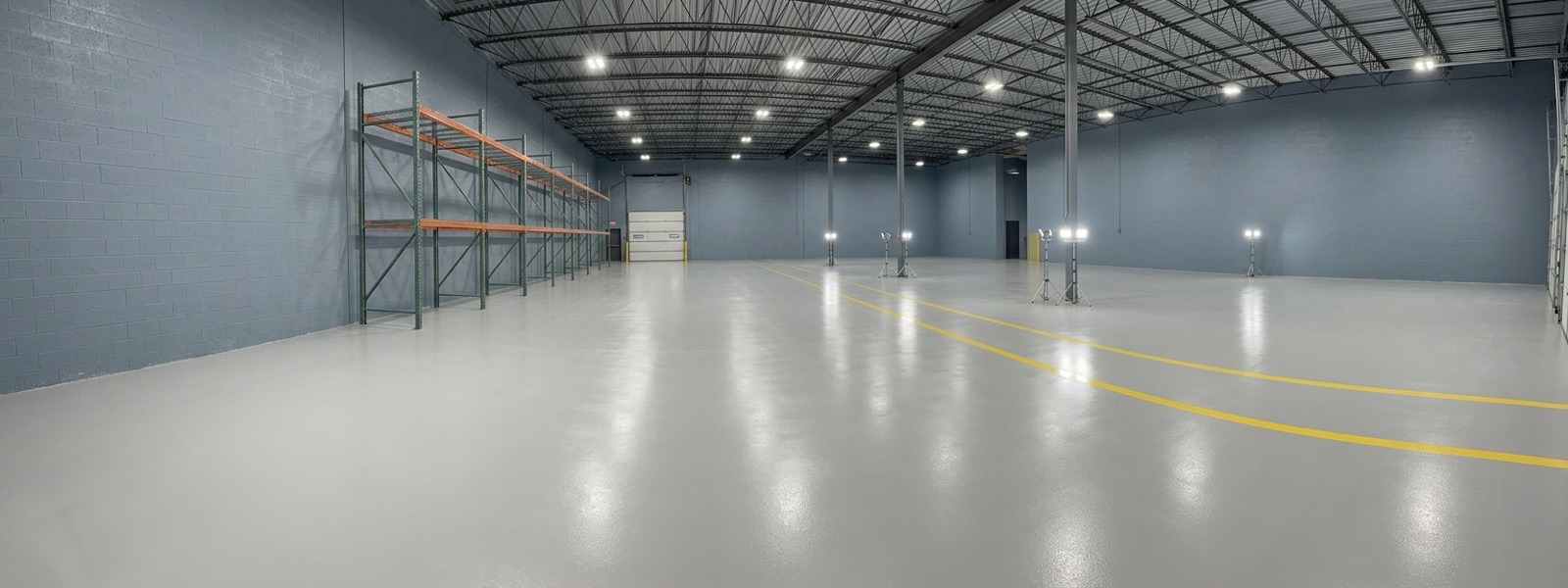
Warehouse, production and shop floors
Fast return to service, UV stable
Thermal shock, wash-down and wet areas
Ramps, kitchens and wash bays
Grinding, patching and joint work, inside the coating scope
Commercial & Industrial
Facility Floors From a Crew That Already Works in Occupied Buildings
- Warehouse, production, retail, institutional and multi-unit floors
- Scheduled around your operations: nights, weekends and planned shutdowns
- High-solids epoxy, urethane and polyaspartic systems
- Anti-slip and chemical-resistant builds where the work demands them
- Estimators, project managers and foremen who coordinate with other trades every day
- Crews trained on swing stage, conventional scaffold and lift equipment
Questions, Answered
Epoxy Floor Coating FAQ
You are a masonry contractor. Why are you coating floors?
Because coatings fail from the surface up, and restoring surfaces is our trade. Preparation, moisture and substrate repair decide whether a floor lasts, and those are the same three things that decide whether a repointed wall lasts. Our crews have done that work since 2006.
Mine will just peel like the last one, won’t it?
Only if it is installed the same way. Peeling and bubbling almost always trace back to two skipped steps: no mechanical profile and no moisture test. We do both before any resin comes out of the pail.
My basement floor gets damp. Is it still a candidate?
Often yes, but we will test it and tell you straight. Managing water is core restoration work for us, so we can look at where the moisture is actually coming from rather than trapping it beneath a new finish.
Will road salt and freeze-thaw wreck it over the winter?
The right topcoat is built for exactly that. Every floor we install is specified for a Pittsburgh or Cleveland winter, with polyaspartics rated for salt, meltwater and repeated freeze-thaw cycling.
How long am I out of the space?
You get a realistic schedule up front, based on your floor and the system going on it, and we plan the work to protect it. On commercial work we will fit the installation into nights, weekends or a planned shutdown.
What do I need to move before you start?
We walk the space with you at the estimate and tell you exactly what has to come out and when, so nothing is a surprise on the first morning.
Is it slick when it gets wet?
Flake finishes have natural grip from the texture. For wash bays, ramps and kitchens we add an anti-slip aggregate, standard on commercial floors and available on any residential one.
Where We Work
Serving Pittsburgh & Greater Cleveland
Headquartered in Pittsburgh, Pennsylvania, and now working throughout the greater Cleveland area.
